Thursday, October 30, 2014

Austin 70.3 Race Report Part 1: The Build Up

I don’t usually do full, lengthy race reports but after the “Guess my bike split” competition I feel I owe it to those who participated to give them some insight into my race and the training that led up to that performance.

After a lot of down time in June and July while I was getting my business ready for our fall programs I got back to some decent training in August. This was derailed when I crashed at a weekly Tueday night group ride and sustained a concussion. I took a bit more time off, raced a couple times and dropped out of a few races. It was very hit or miss as I was listening trying to listen to my body and not push too hard. It was about 6 weeks before I felt “back to normal” and wasn’t getting any headaches or feeling occasional nausea after a hard workout or race.  At this point I knew I was still in decent shape just from staying active and I had the itch to race but wasn’t sure I wanted to commit to a 70.3 distance. Finally, about 4 weeks out from Austin I decided to do it since A) It’s so close, and B) I’d paid the Ironman pro membership for the year but only raced 3 times so I would actually lose money on the year if I didn’t do a 4th race. So I signed up.

With only four weeks to prepare I did a few key sessions a week but didn’t try to overload my body too much. I’d had decent results at a few events this fall with minimal training and knew I was better off going to the line a little underprepared but fresh. In those four weeks I did FOUR longer(ish) rides of 50-65 miles. Each of those included 60-90 min of race pace intervals at 245-260 watts. They varied between 15 min, 10 min and 20 min efforts with a 45min tempo the weekend before. Each of those rides I got a bit stronger and though my ride time stayed at 2:50-3:05 for every one, my TSS increased by about 10 for each ride.


For running I did TWO longer(ish) runs during the build up. Once of them was a 13.3 mile run at 7:30 average and a couple breaks because I was running with a group. The other was an 8 mile tempo run at 5:47 pace that came out to a little over 11 miles after warm up and cool down. I also did one hill repeat workout and one speed workout on the treadmill (8x3 min efforts on 1min rest). I knew my heart and lungs were strong but wasn’t sure if I’d fizzle at mile 10 of the run due to lack of volume.

For swimming I swam 2-3 times a week with masters. Never more than 9000 yards in a week but my times were still good and I was confident I would be fine in the water.

The weekend before Austin I did a 50 mile ride with a 48 min tempo at 282 NP on rough, hilly roads. I felt strong and smooth and was hoping I could hold 260-265 for 56 miles in Austin.  After that ride I got off the bike and ran 5 miles at 6:05 pace. I didn’t feel great on that run but I didn’t feel terrible and I knew there was nothing more I could do.


As race day approached I was confident and excited to give my best effort for the fitness I had on that day. A lot of people have asked me what I thought my bike split was going to be. I wasn’t totally sure and obviously I didn’t care what it was if I hit my power numbers. I’d worked with Ryan, over at Best Bike Split to do some modeling and based on my goal power and we were getting a split of around 2:19 for holding 263 watts NP. I was thinking I could go somewhere around there and even if I rode a little slower I would hopefully come in around 2:20-2:21 still.

Tuesday, October 21, 2014

Austin 70.3 "Guess My Bike Split"

This weekend is the Austin 70.3 in which I am participating. The triathlon season is winding down, I've had to wear a jacket a couple times here in Texas, and the grocery stores have had tinsel out for at least three weeks so why not spread some cheer by giving away some sponsor prizes?! This year's lineup includes three great companies that have supported me all year and provide high quality products that WORK.

All you have to do to enter the contest is guess what my bike split will be at the race this weekend. What makes it even more interesting is that I don't have a clue as to what my split will be so we're all on a level playing field here! To submit your guess simply comment on this post, on Facebook, twitter or shoot me an email. For your skill (or is it pure, dumb luck) the winner will receive the following:

***NEW PRIZES ADDED***

1. A T-shirt and 3 month free membership to Best Bike Split premium

2. A pair of Superfeet insoles

3. Eight packets of FLUID recovery plus a FLUID water bottle

4. A pair of Cobb Cycling shorts


***We also have a new prize for the second closest guess! Second place will receive a free Cobb Cycling T-shirt.***


Not bad for just punching some numbers into your keyboard eh?

Good luck with your guesses and send me some positive vibes on Sunday!!


Tuesday, October 14, 2014

2014 Season Update

It's been a crazy summer and a crazy year here at camp Saroni. Please find a brief summary of the last 6 months brought to you in pictures.


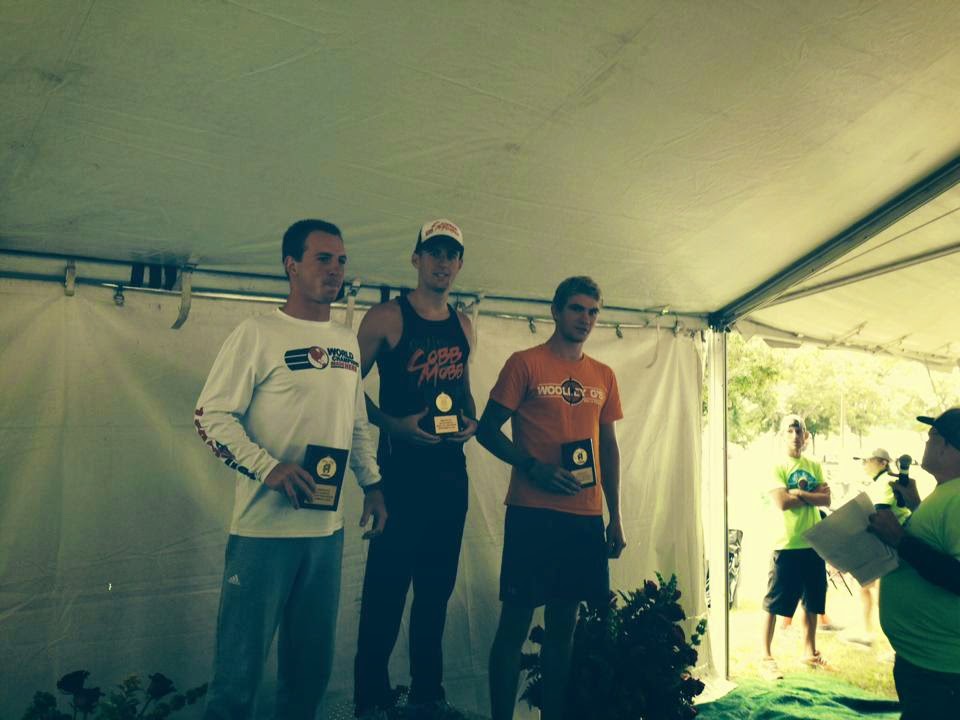
PR and 13th overall at New Orleans 70.3


Rental bike cruising in Michigan.
This was right after I'd tumbled over at a stop sign because
I forgot my feet were strapped to the pedal instead of clipped in. Newb.


4th at a competitive Shadow Creek Ranch Triathlon

Business development and rebranding

2nd to the ageless Lars Finanger at Cypress
Open water clinics with the UTSA Tri team. All business.

Pre-ride coffee

Bike ride gone horribly wrong 
Back in the saddle again and an overall win.


I do have a few more races left this year at Tri Andy's and Austin 70.3. Training has been less than ideal but the fire still burns and I'll be out there giving it my best come race day. Stay tuned for an announcement next week concerning some prizes and giveaways I'll be offering at Austin!

Tuesday, April 22, 2014

Training Tip Tuesday #24- How to Bounce Back from a Bad Race

Let's face it- they happen. They're certainly not fun and don't give us a warm fuzzy feeling but bad races are part of racing. It's still early in the year so it's important to not get too down when the cards don't fall your way on race day. I've outlined 5 steps that I go through when I have a bad race. They are half in jest/half serious. Probably more serious than in jest but they're all feeling that I've had when things don't go my way.  It's important to always pick your head up and keep going though. Find the problem and fix it but keep believing in yourself and what you are capable of.


Step 1- Denial.


This step is key. Before you can admit to mediocrity it's important to deny there was a  failure. Whether it's a sub-par performance or a DNF our first approach is usually to brush a bad race off like it's not a big deal. Maybe it hasn't quite hit home yet or maybe it's too bitter to accept at this point. It's unacceptable to be sad when you're friends are setting pr's and having great races so the best thing to do is pretend like you're unaffected. Deep down you may know you're disappointed but it hasn't really set in yet. You have to make a good appearance and there are too many logistics to handle with picking up your stuff, showering, packing and traveling home to worry about how much you hate sucking. That comes next.

Step 2- Deep, dark depression.


 Unfortunately that pretense of apathy was all a lie. This stage is where you find yourself removed from the race, from all the goings on and it hits you- you suck. It's a terrible feeling and tough to shake. That feeling of hopelessness, that maybe you just aren't very good or can never get better hits everyone at some point in their athletic career. I highly recommend a pre-determined time to wallow in self pity. Many athletes I've talked to have a "24 hour" or "48 hour" rule where they can feel sorry for themselves for that permitted time. It's ok to be disappointed when you have a disappointing day. Go ahead an enter that cave of depression. Just remember you can only stay there for 24 hours and no chainring self-mutilation allowed.

Step 3- Resolve.


This is where you begin climbing out of the black abyss and determine that you are worth more than dirt. That inner fire is re-kindled and it's time to do something about it. You won't let such an embarrassment happen again and you WILL give it another shot. Take that disappointment from a poor performance and channel it towards a renewed since of determination and set a new goal.

Step 4- A Plan.


I'm a firm believer that there is usually a reason why someone has a bad race. Whether it was an obvious reason- (Ate bad seafood the night before, not enough sleep during the week, an injury, etc.) or a less apparent underlying factor- (Training plan design, lifestyle management, a few too many missed workouts), I think there is usually a cause. Now that you have renewed determination and resolve it's important to design a plan to address the reason for your poor result. If you got injured then WHY did the injury occur? Have you been injured before? Is there a variable you aren't controlling that can be controlled? If it's training plan design then do you have a good coach? Did you follow your coaches instructions? How often did you miss or have to re-arrance key workouts? All those little things add up and can contribute to a poor result. The best results I've seen from my athletes come from those who put in week after week and month after month of consistent, balanced training. They make slow but steady progress because they don't miss very many days and they get the work done. You may have more than one issue that needs to be addressed. Find it and fix it.

Step 5- Execution


Now comes the fun/hard/scary part. Executing your new plan and approaching that start line again with no fear of failure. I wrote a blog about "approaching the line with confidence" last fall that talks about this same idea. Don't be afraid to attack your goal with everything you have. The worst you can do is fail.


"Far better is it to dare mighty things, to win glorious triumphs even though checkered by failure… then to rank with those poor spirits who neither enjoy nor suffer much, because they live in a gray twilight that knows not victory nor defeat."   -Theodore Roosevelt


Tuesday, March 25, 2014

Tip Tuesday #23- Do This Not That

One of these days I'm going to get around to riding a blog about myself and the training and racing I've been doing (Yes, I have been doing some). Like my trip to Monterrey, Mexico a week and a half ago for my first 70.3 of the year-
Race went alright- 14th pro
More on that trip later.

Monterrey reminded me that even if you have been doing triathlons for year and years and years, there are a few things you should do and some you shouldn't when approaching your first race of the year. 

Do This- Practice swimming in your wetsuit before the race. Even if you've had the suit for a few years and swam in it many times. If it's been October since you've worn it then get out for a few open water swims, or even practice in the pool a few weeks before the race. The added buoyancy of a wetsuit changes your body position in the water and the extra pressure around your chest and shoulders can take some getting used to. You never know, you might have put on a few extra pounds of "muscle" over the winter making that suit a little tighter than you remember. 

Not That- Unroll your dusty (and possibly moldy) suit on race morning and wriggle into it for the first time this year 15 minutes before your race starts and figure you will be good to go. 

Do This- Clean your bike! If you're like me and you've spent a winter training and poorly maintaining your equipment then race week is a good chance to give everything on your trusty steed a good once over and rub down. A new chain will feel great and make your gears spin much easier. Check the cables and make sure they're not frayed or rusty. Riding on the trainer is actually worse for your bike than outside because you just sit there and sweat buckets of corrosive droplets onto your cables, housing, chain and everything. Check it out, get it cleaned and make sure everything is running smoothly!

Not That- Wipe your frame off quickly with a t-shirt and spin some lube onto the chain figuring you will be good to go. Your bike is a machine and if you want it to carry you at a high speeds and serve you reliably you need to make sure it's got good working parts before you take it to the race track. A bike shop will be able to help you with this. For instance, my shop told me that my brake cables were probably fine but my derailleur cables definitely needed replacing. I appreciated them saving me some money and not just replacing everything they could.

Do This- Sign up for a "rust buster" race where you can practice going through the motions on race day but without the pressure of a big event. Just remembering all the crap we have to bring with us on race day needs a little warm up sometimes. The rust buster could be a local duathlon or you could hold your own mock race as a training session. You don't want to be scrambling around the night before a big race trying to find where you put your race flats, or race belt, or gel flask or any of those items you haven't used in 8 months because they only come out on race day. 

Not That- Like a true pro I completely forgot rubber bands for my bike shoes and a race belt at the local duathlon I did a week out from Monterrey. Oh, and also an extra sticker for my disc wheel after I'd aired it up. Sure, they were only minor details but all part of my pre-race routine and all little annoyances that threw me off. You can be sure that the next weekend I had everything packed and ready to go for Monterrey.

Do This- Practice with the nutrition that will be on course at your big race. Sometimes, what you use in training is different than what's provided at a race. Either bring enough of your own with you or practice with the products that will be served up in the race. I think it's good to utilize aid stations both on the bike and run so you don't have to lug around 15 lbs of food and hydration with you. Also, if you happen to drop a bottle or lose your nutrition (happens all the time) you will be fine since you know you just take from the aid stations.

Not That- Try out the tasty new cheddar cheese pretzel chips they're handing out on race day because they look pretty good. Never mind, you've never had them before and your stomach may revolt like it's a Ukrainian protestor. 

Do This- Practice with the equipment you will use on race day. Most of us know not to "try anything new on race day." The triathlete creed seems to be- "train like it's race day every day." You may already do all your long rides on deep dish aero wheels wearing your race kit and aero helmet. (Don't forget the compression socks!!) However, if you don't use your race gear that often then I would suggest doing a few training sessions with it (or a rust buster race) just to check it out. Make sure your tires are good with no nicks or dry rot. Figure out how much body glide you need to rub over your body to prevent chaffing in unseemly places. Make sure you can see where you're going when tucked in the aero position with that giant egg looking thing covering your scalp. 

Not That- Just don't do it.
I don't care how fast it is. I reserve the right to make fun of anyone wearing this helmet.


Tuesday, March 11, 2014

TTT #22- Practice Your Transitions!

The mount/dismount line of a triathlon is the scariest most exhilarating spot to stand for spectators. If you want a true adrenaline rush or love action sports- forget UFC fighting or The Hunger Games- just watching a triathlon transition will give you all the gore and near death experiences you crave.


There's something about being in a horizontal position for twenty minutes to an hour with our face underwater surrounded by 1000 other thrashing mammals that makes us completely disoriented when we emerge from our aquatic environment. Transitions are the "4th discipline" of triathlon. The clock doesn't stop for us to tie our shoes and put our helmet on so why don't we practice these things? We practice swimming, biking and running for endless hours and even though the transition is a very small part of the race it still directly impacts our time.

Other than helping you go faster on race day practicing your transitions will help things go smoother and cause much less anxiety when you're in the heat of the moment. We've all SEEN this guy at the races but do you want to BE this guy?


When you practice transitions you want to mimic the experience and equipment you will have on race day. Set up your transition just like you would race morning in a grassy field or your driveway. Like I talked about a few weeks ago, your goal is prepare for what you will encounter on race day. Run through your entire swim-to-bike transition, mounting the bike and getting up to speed as quickly as possible. Many people forget to check what gear their bike is in when they start so practice in some different combinations to find what allows you to accelerate the fastest. If you're doing an Ironman race then I'd suggest putting all your stuff in a plastic bag and shaking it around then practice withdrawing the items and putting them on your wet body as fast and and smoothly as possible. The key to a good transition it get things right the first time. So practice being smooth and you will be fast. 

Whether you do a flying mount with your shoes clipped on the pedals already or run in your bike shoes doesn't matter- practice it. Will you have large water bottles sticking out from behind your saddle that make mounting different on race day? Practice it. Practice running with your bike, steering it around cones and mounting and dismounting quickly.

T2 is similar (and much easier I think) but if you will change socks or put on sunscreen then practice that. 

My dad has a funny story from when he did a sprint triathlon back in the early 2000's. He is a pretty good athlete so even though he didn't train much his splits were all middle of the pack and he had a respectable time- with the exception of his transitions. I was appalled when I saw his T1 was something like 10 or 12 minutes long. "What were you doing in there dad?!" I asked. "Eating a sandwich or something?" "Actually, yes," he replied. He said he'd gotten to his bike, toweled off his entire body, changed out of his wet shorts into some dry biking ones, sat down to put his socks and shoes on, put on sunscreen and yes, eaten a sandwich. Wouldn't want to be under fueled for that 12 mile bike ride!

Note: this is not an actual picture of my father

In his next race my dad dropped 6 minutes off his time, not by training any more but just by making his transitions faster and smoother! 

When I was younger I used to set up transition in my driveway and recruited my brothers to hold a broomstick as my bike rack. I'd practice ten times in a  row, recording my split each time and figuring out where I could drop tenths of a second. I practiced it so much and have raced for so long now that I don't really have to think too much about it. My body just knows what to do. 

While the guys below are pretty darn good you can see there's still some room for improvement. (Like Crowie making sure he knows where his bike is).


A few weeks out from their first race of the year I have all my athletes set up a transition area like I described above. Then I have them do very short repeats of 1/2 - 1 mile on the bike followed by a 200-400 meter run. Then they repeat that over and over again. Not only are they able to practice their transitions multiple times but it's a great speed workout to make sure the muscles are all firing leading into race day.

Practice your transitions and you WILL go faster on race day. I promise!


Tuesday, March 4, 2014

TTT #21- There Ain't no Trainin' Like Racin'

What a weekend. There was an absolute phenomenal race production by Brookshire's Fresh at the FRESH 15k in Tyler, Tx.


Of course I had to have a great weekend anthem for the long car ride and fast race. Is there any reason I shouldn't listen to this song over and over again?


Lots of FRESH snow on the drive home.


For the inaugural year, Brookshire's did a great job setting up a challenging course and bringing in vendors and a fast field. I've never raced a 15k before and this one was a doozy. I ended up 9th overall after a solid effort and a hard run.

My results aside, I was reflecting after the race about how I would have liked to go faster (typical post-race musings for your average triathlete) and it reminded me that racing is a skill that has to be practiced. I went into this event with about two weeks of "qualify" running in my legs. Meaning, I had just started including some interval work and tempo's into my training after a little bit longer build up in my base/strength phase then I normally do. I needed this hard effort though to test my limits and get a good snapshot of where my fitness was at. I also needed to get some good hurt on like I wouldn't normally hurt in training. I started thinking about what an excellent tool racing can be if utilized effectively in a training program.

Some reasons that racing can be beneficial to your training:

-It provides an exciting break from the normal rigors of training. Training throughout the winter months can get quite tedious (See my post about the winter blues) and including a race or multiple races gives you something exciting to look forward to on the weekend. It's a chance to see friends and do something social while also earning your first free t-shirt for the year.

-Excellent way to benchmark test. Testing is important to mark your fitness and track progress. A race can be an excellent way to test your fitness and establish new benchmark paces for training. This 15k tells me exactly where my threshold heart rate and pace is for the run at this moment. Look around in your area for a Masters swim meet you can do to test your swimming. I participated in the One-Hour Postal Challenge in January. It is one of the most miserable experiences you can image in a pool (swim as hard as you can for an hour). BUT, it told me exactly what my threshold pace was AND I was able to see improvement from when I did the hour swim last year.  If you use power on the bike you can find a local time trial to participate in.

-Practice pushing yourself. Like I mentioned above, racing is a learned skill. Suffering takes practice. A single sport event can be a great way to see how far you can push yourself when you don't have any other sports to worry about. You think you're swimming hard at the start of a triathlon? Try competing in a 200 or 500 yard freestyle and see how hard you can REALLY swim. You think your legs hurt on the bike? Try racing an open 40k time trial or any bike race. Any race is a chance to push yourself to new levels and challenge your body to go harder than it's gone before.


I'm not a big fan of "training races." I think that in general, if you sign up for a race you should go out there and give it your best effort on that day. Whether you're tapered or tired see what your body will give you on the day.

-It's great training. As long as you make sure and include the appropriate amount of recovery following a race, racing will help push your fitness up a level. Different types of races take different types of recovery. Running a marathon or competing in an Ironman doesn't always help your fitness a lot (depending on your race goals for the year and current fitness level) because they take more time to recovery from during which you miss other valuable training. A hard 5k or 10k however is an excellent form of speed work that you will recover from pretty quickly and can usually jump back into normal training pretty quickly.

Cautionary Note: Everyone is different and has different goals for their training and racing. Racing is another TOOL to use in training when looking at a bigger picture or end goal in mind. The 15k I completed in was an excellent benchmark for my current fitness and I was able push myself a lot harder than I might in a normal tempo or threshold run.  I don't recommend racing every weekend and forgoing the training side of training.